Alaska Bird Tours
Menu
← Alaska species directory

Kodiak bird species

A regional directory for Kodiak Island and surrounding marine habitats.

Common Loon

Photo: Mike Budd / USFWS · U.S. Fish & Wildlife Service · Public Domain

Loons

Common Loon

Gavia immer

A large, striking diving bird with a haunting tremolo call that echoes across Kodiak's bays. Breeding adults display glossy black heads, red eyes, and bold black-and-white checkered backs.

Pacific Loon

Loons

Pacific Loon

Gavia pacifica

A medium-sized loon with a sleek dove-gray head and a striking purple throat patch in breeding plumage. Often seen in large flocks offshore during migration along Kodiak's coast.

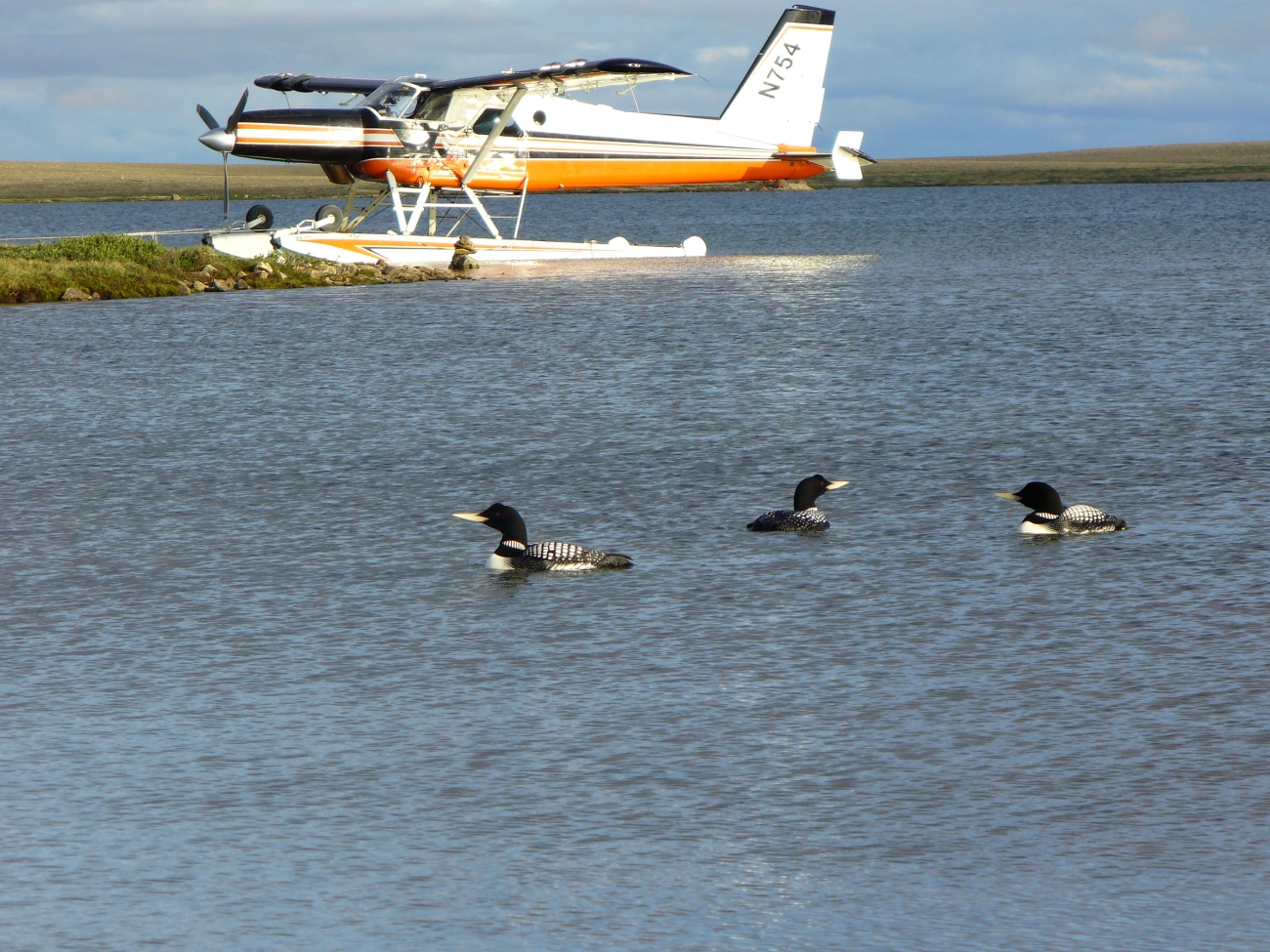
Red-throated Loon

Photo: Lisa Hupp / USFWS · Northern Alaska tundra pond · U.S. Fish & Wildlife Service · Public Domain

Loons

Red-throated Loon

Gavia stellata

The smallest loon, recognized by its slim upturned bill and distinctive brick-red throat patch during breeding season. A regular visitor to Kodiak coastal waters.

Red-necked Grebe

Photo: Tamara Zeller/USFWS · Anchorage, Alaska · U.S. Fish & Wildlife Service · Public Domain

Grebes

Red-necked Grebe

Podiceps grisegena

A large grebe with a distinctive rusty-red neck and whitish cheeks in breeding plumage. An excellent diver found in Kodiak's harbors and sheltered bays.

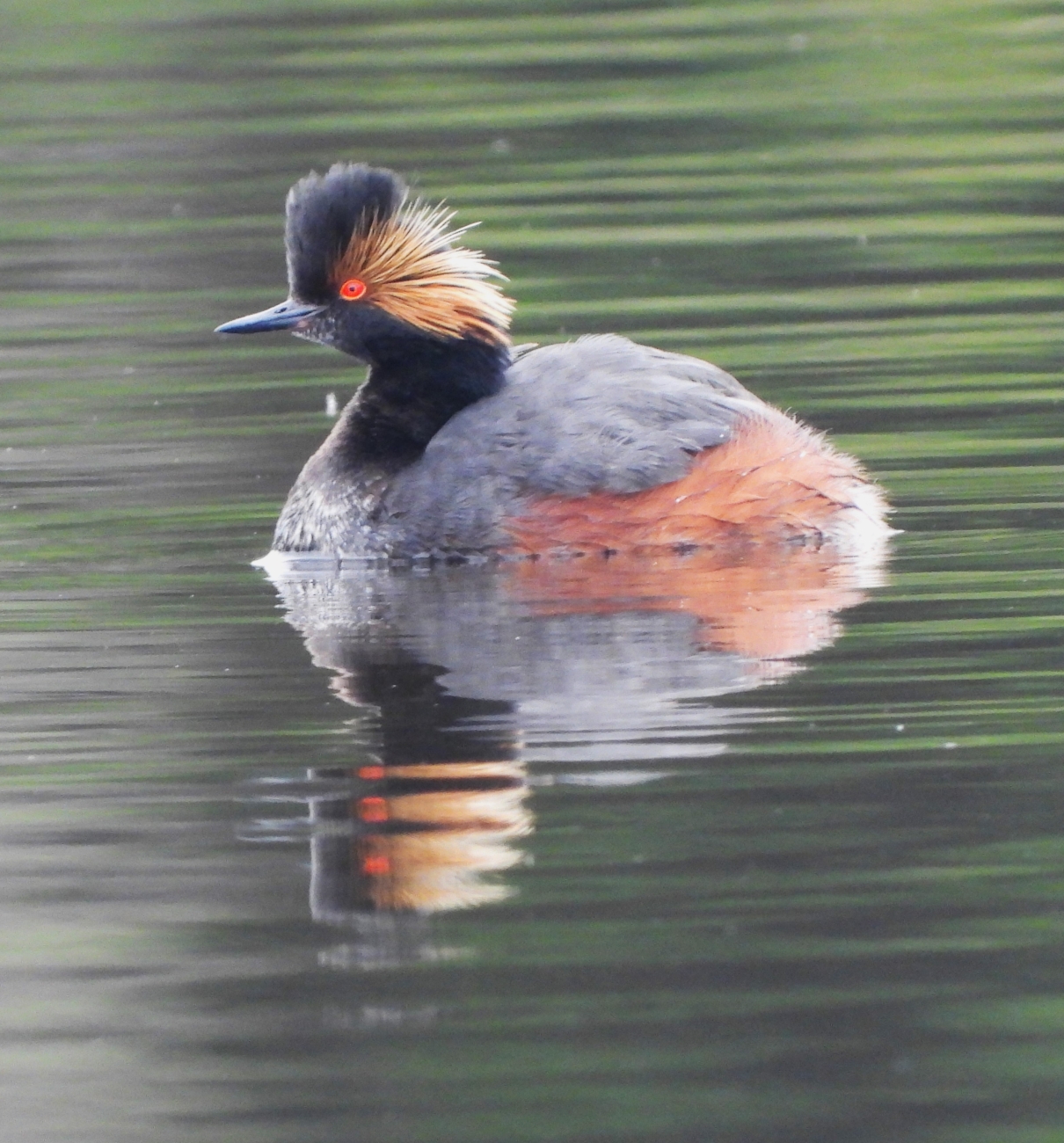
Horned Grebe

Photo: Donna A. Dewhurst/USFWS · Potter Marsh, Anchorage, Alaska · U.S. Fish & Wildlife Service · Public Domain

Grebes

Horned Grebe

Podiceps auritus

A compact grebe named for its striking golden-orange 'horns' in breeding plumage. Commonly seen in Kodiak's harbors and nearshore waters during winter.

Western Grebe

Photo: Addison Mohler/USFWS · U.S. Fish & Wildlife Service · Public Domain

Grebes

Western Grebe

Aechmophorus occidentalis

The largest North American grebe, with a long snakelike neck, bright red eye, and striking black-and-white plumage. An uncommon visitor to Kodiak coastal waters.

Tufted Puffin

Photo: Lisa Hupp/USFWS · Kodiak National Wildlife Refuge, Alaska · U.S. Fish & Wildlife Service · Public Domain

Seabirds

Tufted Puffin

Fratercula cirrhata

An unmistakable seabird with a large orange-red bill, white face, and drooping golden head tufts in breeding plumage. One of Kodiak's most iconic birds, nesting in large colonies on offshore islands.

Horned Puffin

Photo: Lisa Hupp/USFWS · Alaska · U.S. Fish & Wildlife Service · Public Domain

Seabirds

Horned Puffin

Fratercula corniculata

A chunky seabird with a large, flattened orange-and-yellow bill and a distinctive black fleshy 'horn' above each eye in breeding season. Nests alongside Tufted Puffins on Kodiak's rocky offshore islands.

Common Murre

Photo: Robin Corcoran / USFWS · Eastern Bering Sea, Alaska · U.S. Fish & Wildlife Service · Public Domain

Seabirds

Common Murre

Uria aalge

A sleek, torpedo-shaped seabird with a pointed bill and black-and-white plumage. One of the most numerous seabirds in the North Pacific, nesting in dense colonies on Kodiak's offshore rocks and cliffs.

Pigeon Guillemot

Photo: Mike Baird · Wikimedia Commons · CC BY 2.0

Seabirds

Pigeon Guillemot

Cepphus columba

A compact, coal-black seabird with bold white wing patches and bright red feet. A year-round resident on Kodiak, often seen swimming in harbors and diving near shore.

Marbled Murrelet

Photo: USFWS Pacific Region · Wikimedia Commons · CC BY 2.0

Seabirds

Marbled Murrelet

Brachyramphus marmoratus

A small, cryptically plumaged seabird that is one of the rarest in North America due to its unusual nesting habit. In summer it sports brown-and-white marbled plumage; in winter, clean black and white.

Rhinoceros Auklet

Photo: D. Lambert/USFWS · U.S. Fish & Wildlife Service · Public Domain

Seabirds

Rhinoceros Auklet

Cerorhinca monocerata

A medium-sized, drab-brownish auk with distinctive white facial plumes and a stubby horn at the base of its orange bill during the breeding season. Seen offshore around Kodiak.

Ancient Murrelet

Photo: Eric Ellingson · Wikimedia Commons · CC BY 2.0

Seabirds

Ancient Murrelet

Synthliboramphus antiquus

A small, compact alcid with a distinctive silver-gray back, black head, and wispy white 'ancient' plumes around the face. Kodiak is within the core of this species' range.

Harlequin Duck

Photo: Laura L. Whitehouse/USFWS · Alaska SeaLife Center, Seward, Alaska · U.S. Fish & Wildlife Service · Public Domain

Waterfowl

Harlequin Duck

Histrionicus histrionicus

One of Alaska's most spectacularly patterned ducks: males wear slate-blue plumage adorned with white crescents, spots, and chestnut flanks. A year-round resident along Kodiak's rocky coastlines.

Surf Scoter

Photo: Lee Karney / USFWS · U.S. Fish & Wildlife Service · Public Domain

Waterfowl

Surf Scoter

Melanitta perspicillata

A stocky sea duck with an oddly shaped, multicolored bill. Males are all black with white patches on the forehead and nape. Common in Kodiak's coastal bays and harbors during winter.

White-winged Scoter

Photo: Dave Menke / USFWS · U.S. Fish & Wildlife Service · Public Domain

Waterfowl

White-winged Scoter

Melanitta deglandi

The largest North American scoter, identified by a white wing patch visible in flight and at rest. Males are black with a white teardrop eye patch. A common winter visitor to Kodiak's bays.

Long-tailed Duck

Photo: J. Mills / NPS · Telaquana River, Alaska · U.S. Fish & Wildlife Service · Public Domain

Waterfowl

Long-tailed Duck

Clangula hyemalis

A small sea duck with complex plumage that changes dramatically through the seasons. Males in winter sport long, elegant central tail feathers and bold black-and-white markings. Common on Kodiak's offshore waters.

Common Eider

Photo: Dave Menke / USFWS · Kodiak National Wildlife Refuge, Alaska · U.S. Fish & Wildlife Service · Public Domain

Waterfowl

Common Eider

Somateria mollissima

The largest duck in the Northern Hemisphere. Males have striking white-and-black plumage with a distinctive sloping bill profile. Breeds on Kodiak and winters along the coast.

Canada Goose

Photo: John Magera / USFWS · U.S. Fish & Wildlife Service · Public Domain

Waterfowl

Canada Goose

Branta canadensis

The familiar large goose with a black head and neck, white cheek patch, and brown body. A common resident and migrant on Kodiak's wetlands, meadows, and shorelines.

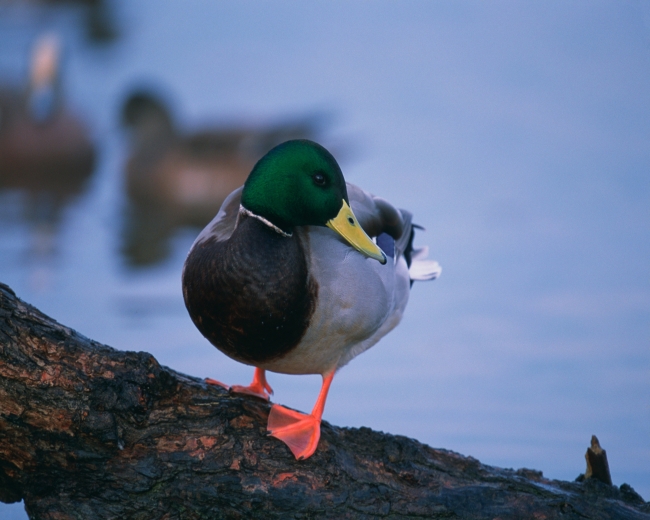
Mallard

Photo: Gary Kramer/USFWS · U.S. Fish & Wildlife Service · Public Domain

Waterfowl

Mallard

Anas platyrhynchos

The most familiar duck in the world. Males sport brilliant iridescent green heads, yellow bills, and chestnut-brown chests. Mallards are common year-round residents on Kodiak's fresh and brackish waters.

Bald Eagle

Photo: Peter Pearsall/USFWS · U.S. Fish & Wildlife Service · Public Domain

Raptors

Bald Eagle

Haliaeetus leucocephalus

The symbol of the United States and one of Alaska's most iconic birds. Adults have a brilliant white head and tail contrasting with a dark brown body. Kodiak has one of the highest densities of Bald Eagles in the world.

Peregrine Falcon

Photo: Roy W. Lowe / USFWS · U.S. Fish & Wildlife Service · Public Domain

Raptors

Peregrine Falcon

Falco peregrinus

The fastest animal on Earth, capable of reaching speeds over 240 mph in a hunting stoop. Adults have blue-gray upperparts, a dark helmet, and cream-colored underparts barred with black. Breeds on Kodiak's sea cliffs.

Red-tailed Hawk

Photo: Alan D. Wilson · Wikimedia Commons · CC BY-SA 2.5

Raptors

Red-tailed Hawk

Buteo jamaicensis

North America's most widespread hawk, recognized by its rusty-red tail in adults. Seen year-round in Kodiak's open forests and meadows, where it soars on thermals.

Merlin

Photo: Karen Laubenstein / USFWS · Potter Marsh, Anchorage, Alaska · U.S. Fish & Wildlife Service · Public Domain

Raptors

Merlin

Falco columbarius

A small, fierce falcon with rapid wingbeats and bold streaking on its underparts. Males are blue-gray above; females and immatures are brown. Passes through Kodiak during migration.

Northern Harrier

Photo: Amanda Boyd / USFWS · U.S. Fish & Wildlife Service · Public Domain

Raptors

Northern Harrier

Circus hudsonius

A slender, long-winged hawk that glides low over fields and marshes with wings held in a distinctive V shape. Males are gray; females and immatures are brown with a white rump patch.

Sharp-shinned Hawk

Photo: Sandra Uecker/USFWS · U.S. Fish & Wildlife Service · Public Domain

Raptors

Sharp-shinned Hawk

Accipiter striatus

The smallest hawk in North America, a nimble forest hunter with short rounded wings and a long tail. Migrates through Kodiak in spring and fall, often appearing unexpectedly in backyards.

Black Oystercatcher

Photo: Dave Menke/USFWS · Kodiak Island, Alaska Maritime National Wildlife Refuge · U.S. Fish & Wildlife Service · Public Domain

Shorebirds

Black Oystercatcher

Haematopus bachmani

A large, unmistakable shorebird with all-black plumage, a long bright orange-red bill, and yellow eyes. A year-round resident on Kodiak's rocky shores, rarely moving far from the intertidal zone.

Dunlin

Photo: Lisa Hupp / USFWS · Arctic National Wildlife Refuge, Alaska · U.S. Fish & Wildlife Service · Public Domain

Shorebirds

Dunlin

Calidris alpina

A small, hunch-backed sandpiper with a drooped bill tip. Breeds on coastal tundra; enormous flocks pass through Kodiak in fall, sweeping over mudflats in tight aerial formations.

Western Sandpiper

Photo: USFWS · Western Alaska breeding range · U.S. Fish & Wildlife Service · Public Domain

Shorebirds

Western Sandpiper

Calidris mauri

One of the most numerous shorebirds in the world, staging in vast flocks along Alaska's coast during migration. A small sandpiper with a drooped bill tip and rufous wash in breeding plumage.

Wandering Tattler

Photo: Dave Menke / USFWS · Mary Island, Kodiak Island, Alaska · U.S. Fish & Wildlife Service · Public Domain

Shorebirds

Wandering Tattler

Tringa incana

A medium-sized gray shorebird with a bobbing 'teetering' walk and a loud wailing call. A characteristic bird of Kodiak's wave-washed rocky beaches and kelp-draped reefs.

Black Turnstone

Photo: Peter Pearsall / USFWS · U.S. Fish & Wildlife Service · Public Domain

Shorebirds

Black Turnstone

Arenaria melanocephala

A stout, dark shorebird that flips over stones and kelp to find invertebrates. Breeding adults have a bold black-and-white pattern; in winter they are uniformly dark above.

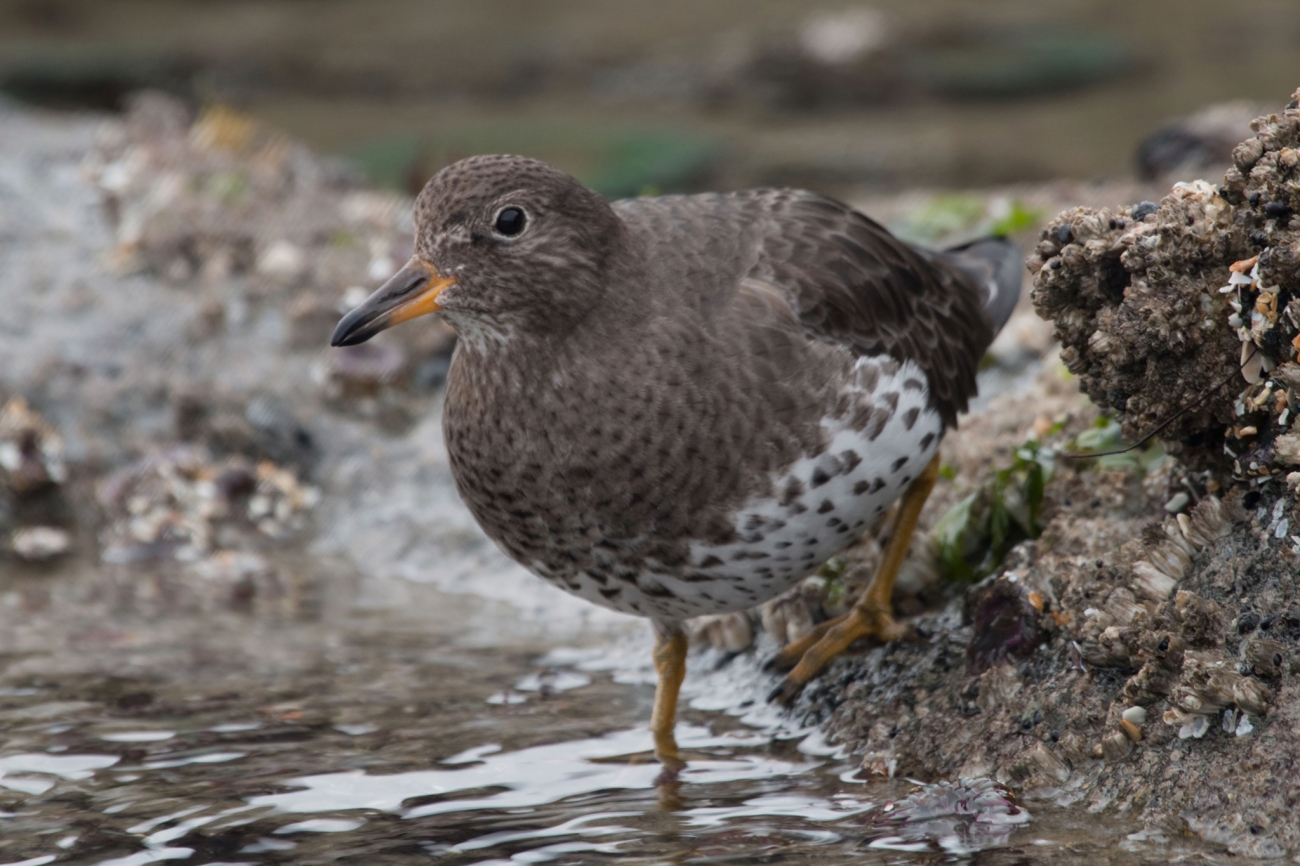
Surfbird

Photo: Peter Pearsall / USFWS · U.S. Fish & Wildlife Service · Public Domain

Shorebirds

Surfbird

Calidris virgata

A medium-sized, stocky shorebird of rocky wave-washed coastlines, with a short yellow-based bill and a distinctive white rump and tail with a dark terminal band. Closely associated with the surf zone.

Rock Sandpiper

Photo: Donna A. Dewhurst/USFWS · Alaska · U.S. Fish & Wildlife Service · Public Domain

Shorebirds

Rock Sandpiper

Calidris ptilocnemis

A robust sandpiper that is the western Alaska equivalent of the Purple Sandpiper. In winter plumage it appears dull gray, blending into rocky shores. An uncommon winter resident on Kodiak.

Least Sandpiper

Shorebirds

Least Sandpiper

Calidris minutilla

The world's smallest shorebird, easily identified by its yellowish legs (unique among small sandpipers) and hunched posture. Passes through Kodiak in large numbers during both spring and fall migration.

Steller's Jay

Photo: S. Taheri · Wikimedia Commons · CC BY-SA 4.0

Songbirds

Steller's Jay

Cyanocitta stelleri

The only crested jay in western North America, with a jet-black head and brilliant cobalt-blue body. A bold, noisy year-round resident in Kodiak's Sitka spruce forests.

Common Raven

Photo: Ken Thomas · Wikimedia Commons · CC0 1.0

Songbirds

Common Raven

Corvus corax

The largest passerine bird in the world, with all-black plumage, a massive bill, and a wedge-shaped tail in flight. Ravens are highly intelligent, curious, and an iconic presence throughout Kodiak Island.

American Crow

Photo: Walter Siegmund · Wikimedia Commons · CC BY-SA 3.0

Songbirds

American Crow

Corvus brachyrhynchos

A medium-sized all-black corvid of coastal Alaska. Birds formerly treated as Northwestern Crow are now included within American Crow.

Black-billed Magpie

Photo: Steve Hillebrand / USFWS · Kenai National Wildlife Refuge, Alaska · U.S. Fish & Wildlife Service · Public Domain

Songbirds

Black-billed Magpie

Pica hudsonia

A large, flashy corvid with iridescent black-and-white plumage and an extremely long tail. Bold and curious, magpies are a visible year-round resident in open areas near Kodiak town.

Pacific Wren

Photo: Becky Matsubara · Wikimedia Commons · CC BY 2.0

Songbirds

Pacific Wren

Troglodytes pacificus

One of Alaska's tiniest birds, a dark brown, stubby-tailed wren with a disproportionately powerful song. A secretive but common resident in Kodiak's dense Sitka spruce understory.

Chestnut-backed Chickadee

Photo: Minette Layne · Wikimedia Commons · CC BY-SA 2.0

Songbirds

Chestnut-backed Chickadee

Poecile rufescens

The westernmost chickadee in North America, with a rich chestnut back and flanks, black cap, and white cheeks. A lively, acrobatic forager in Kodiak's coastal spruce forests.

Glaucous-winged Gull

Photo: Dick Daniels · Wikimedia Commons · CC BY-SA 3.0

Gulls & Terns

Glaucous-winged Gull

Larus glaucescens

The most common large gull in Alaska, with pale gray wings tipped in white and pink legs. A year-round resident of Kodiak's harbors, beaches, and fishing docks.

Herring Gull

Photo: Caleb Putnam · Wikimedia Commons · CC BY-SA 2.5

Gulls & Terns

Herring Gull

Larus argentatus

A large, classic gull with pink-gray wings, a red spot on the lower mandible, and yellow eyes. Present in Kodiak's harbors throughout the year, often mixing with Glaucous-winged Gulls.

Short-billed Gull

Photo: Jerzy Strzelecki · Wikimedia Commons · CC BY-SA 3.0

Gulls & Terns

Short-billed Gull

Larus brachyrhynchus

A medium-sized gull with a small bill, yellow legs, and dark eyes. This North American species was formerly included within Mew Gull.

Bonaparte's Gull

Photo: Dick Daniels · Wikimedia Commons · CC BY-SA 3.0

Gulls & Terns

Bonaparte's Gull

Chroicocephalus philadelphia

A small, tern-like gull with a black head in breeding plumage, pink-red legs, and buoyant flight. Named not for Napoleon but for his ornithologist nephew Charles Lucien Bonaparte.

Arctic Tern

Photo: Donna A. Dewhurst / USFWS · Anchorage Coastal Wildlife Refuge, Potter Marsh, Alaska · U.S. Fish & Wildlife Service · Public Domain

Gulls & Terns

Arctic Tern

Sterna paradisaea

The world's greatest long-distance migrant, making an epic annual journey from the Arctic to Antarctic and back—up to 70,000 miles per year. Nests in colonies on Kodiak's coastal flats.

Black-legged Kittiwake

Photo: Ómar Runólfsson · Wikimedia Commons · CC BY 2.0

Gulls & Terns

Black-legged Kittiwake

Rissa tridactyla

A graceful, pelagic gull with clean white plumage, pale gray wings tipped in solid black ('dipped in ink'), and a distinctive nasal kitti-waake call. Nests in cliff colonies on Kodiak's rocky sea stacks.

Pelagic Cormorant

Photo: Sandy Cole · Wikimedia Commons · CC BY 2.0

Cormorants

Pelagic Cormorant

Urile pelagicus

The smallest and most slender North American cormorant, with iridescent green-purple plumage and tiny red facial skin. A common year-round resident nesting on Kodiak's sea cliffs.

Double-crested Cormorant

Photo: Steve Hillebrand/USFWS · Shumagin Islands, Alaska · U.S. Fish & Wildlife Service · Public Domain

Cormorants

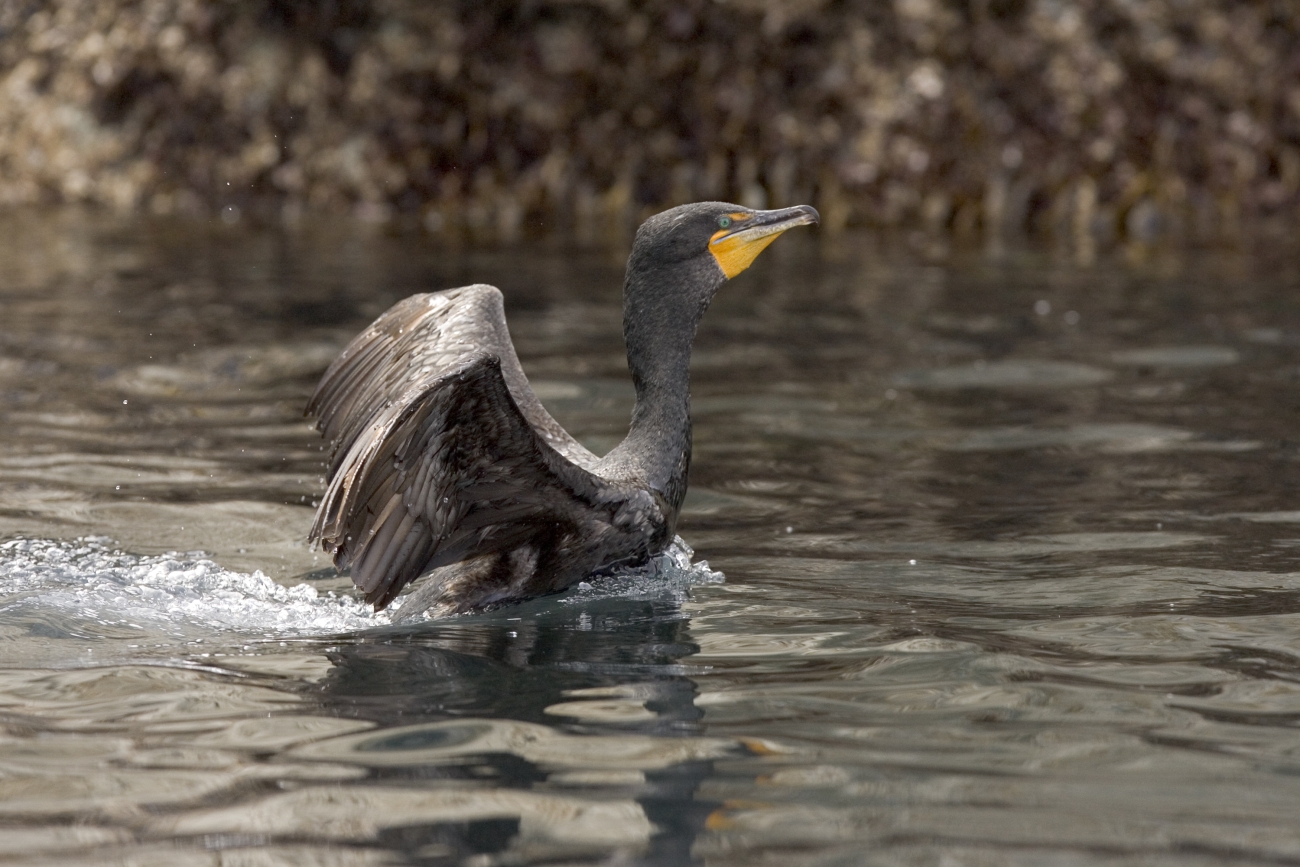
Double-crested Cormorant

Nannopterum auritum

The most widespread cormorant in North America, with black plumage, an orange-yellow throat pouch, and briefly visible twin white or black crests in breeding season. Common in Kodiak's harbors.

Great Horned Owl

Photo: Jake Bonello / USFWS · U.S. Fish & Wildlife Service · Public Domain

Owls

Great Horned Owl

Bubo virginianus

The most powerful owl in North America, with large ear tufts, fierce yellow eyes, and a booming territorial hoot. A year-round resident in Kodiak's mixed forests, active year-round even in deep winter.

Short-eared Owl

Photo: Tom Koerner / USFWS · U.S. Fish & Wildlife Service · Public Domain

Owls

Short-eared Owl

Asio flammeus

A medium-sized owl that hunts in daylight, coursing low over open tundra on buoyant, floppy wingbeats. Mottled brown plumage and tiny ear tufts visible at close range. Nests on Kodiak's coastal meadows.

Barred Owl

Photo: Mael Glon, Ph.D. / USFWS · U.S. Fish & Wildlife Service · Public Domain

Owls

Barred Owl

Strix varia

A large, round-headed, earless owl with horizontal brown-and-white barring on the breast and vertical streaks below. An expanding invasive species that has recently reached Kodiak's forests.

Downy Woodpecker

Photo: Randy Streufert · U.S. Fish & Wildlife Service · Public Domain

Woodpeckers

Downy Woodpecker

Dryobates pubescens

The smallest woodpecker in North America, with a compact body, white back stripe, and—in males—a small red patch on the head. A common visitor to backyard feeders and forest edges near Kodiak town.

Hairy Woodpecker

Photo: Minette Layne · Wikimedia Commons · CC BY-SA 2.0

Woodpeckers

Hairy Woodpecker

Dryobates villosus

A medium-sized woodpecker nearly identical to the Downy but much larger, with a long chisel-like bill. A year-round resident in Kodiak's mature Sitka spruce and mixed forests.

Northern Flicker

Photo: Lee Karney / USFWS · U.S. Fish & Wildlife Service · Public Domain

Woodpeckers

Northern Flicker

Colaptes auratus

A large, distinctive woodpecker often seen foraging on the ground for ants. In Alaska, the Red-shafted form shows salmon-red underwing linings and a red malar stripe on males.

Red-breasted Sapsucker

Photo: Becky Matsubara · Wikimedia Commons · CC BY 2.0

Woodpeckers

Red-breasted Sapsucker

Sphyrapicus ruber

A striking woodpecker with a brilliant red head and breast and a bold black-and-white body. Creates neat rows of small holes (sap wells) in tree bark. A regular summer resident in Kodiak's alders and willows.

Fox Sparrow

Photo: Cephas · Wikimedia Commons · CC BY-SA 3.0

Sparrows & Finches

Fox Sparrow

Passerella iliaca

A large, robust sparrow with rich rufous-brown streaking and a distinctive double scratch feeding motion in leaf litter. The Sooty subspecies common in coastal Alaska is particularly dark.

Song Sparrow

Photo: Ron Knight · Wikimedia Commons · CC BY 2.0

Sparrows & Finches

Song Sparrow

Melospiza melodia

One of the most widespread and variable sparrows in North America. The heavy-streaked Aleutian subspecies found in Kodiak is large and dark. Sings persistently from shrubby cover.

Dark-eyed Junco

Photo: Wolfgang Wander · Wikimedia Commons · CC BY-SA 3.0

Sparrows & Finches

Dark-eyed Junco

Junco hyemalis

A small, clean-looking sparrow with a dark hood contrasting with a white belly and white outer tail feathers that flash in flight. An abundant year-round resident around Kodiak.

Pine Siskin

Photo: Becky Matsubara · Wikimedia Commons · CC BY 2.0

Sparrows & Finches

Pine Siskin

Spinus pinus

A small, streaky, brown finch with flash patches of yellow in the wings and tail. Often found in large, nomadic flocks moving through Kodiak's coniferous forests in search of seeds.

American Robin

Photo: Steve Maslowski / USFWS · Wikimedia Commons · CC BY 2.0

Thrushes

American Robin

Turdus migratorius

One of North America's most familiar birds, with a warm orange-red breast and cheerful caroling song. An abundant summer resident on Kodiak, arriving in early spring and leaving in fall.

Varied Thrush

Photo: Becky Matsubara · Wikimedia Commons · CC BY 2.0

Thrushes

Varied Thrush

Ixoreus naevius

One of Alaska's most beautiful birds, with deep blue-gray upperparts, a burnt-orange breast, and a bold orange eyebrow. Its eerie, buzzy single-note song echoes through Kodiak's misty spruce forests.

Hermit Thrush

Thrushes

Hermit Thrush

Catharus guttatus

A medium-sized, spotted thrush with a distinctive habit of slowly raising and then lowering its rufous tail. Considered by many to have the most beautiful song of any North American bird.

Swainson's Thrush

Thrushes

Swainson's Thrush

Catharus ustulatus

A buffy-faced, olive-brown thrush with a distinctive ascending, spiraling song. One of the most numerous thrushes migrating through Alaska, including Kodiak, each spring and fall.

Yellow Warbler

Warblers

Yellow Warbler

Setophaga petechia

One of Alaska's brightest and most widespread warblers—a jewel of vivid yellow with rusty breast streaks on males. One of the earliest warblers to arrive in Kodiak each spring.

Orange-crowned Warbler

Photo: Becky Matsubara · Wikimedia Commons · CC BY 2.0

Warblers

Orange-crowned Warbler

Leiothlypis celata

One of Alaska's dullest warblers—olive-green overall with faint streaking and a hidden orange crown patch rarely visible in the field. Despite its appearance, it's a hardy early spring migrant.

Wilson's Warbler

Photo: Len Blumin · Wikimedia Commons · CC BY 2.0

Warblers

Wilson's Warbler

Cardellina pusilla

A tiny, bright yellow warbler with an olive back and—in males—a distinct black cap. One of the most abundant warblers in Alaska, passing through Kodiak in large numbers during migration.

Yellow-rumped Warbler

Photo: Jac. Janssen · Wikimedia Commons · CC BY 2.0

Warblers

Yellow-rumped Warbler

Setophaga coronata

The most abundant and widespread warbler in North America, recognized by its distinctive yellow rump, yellow side patches, and yellow crown. The Myrtle form common in Alaska has a white throat.

Townsend's Warbler

Photo: VJAnderson · Wikimedia Commons · CC BY-SA 4.0

Warblers

Townsend's Warbler

Setophaga townsendi

A strikingly beautiful warbler with bold black-and-yellow face pattern and olive-green back. A regular migrant through Kodiak, sometimes wintering in small numbers in spruce forests.

Tree Swallow

Photo: Cephas · Wikimedia Commons · CC BY-SA 3.0

Swallows

Tree Swallow

Tachycineta bicolor

A sleek, iridescent blue-green swallow with clean white underparts. One of the first swallows to arrive in spring and one of the most common aerial insectivores over Kodiak's wetlands and coastal meadows.

Violet-green Swallow

Photo: Wolfgang Wander · Wikimedia Commons · CC BY-SA 3.0

Swallows

Violet-green Swallow

Tachycineta thalassina

A beautiful swallow with emerald-green upperparts, purple rump, and pure white underparts that wrap up around the eye. Nests in tree cavities and cliff crevices throughout coastal Alaska including Kodiak.

Bank Swallow

Photo: Michael Schramm / USFWS · U.S. Fish & Wildlife Service · Public Domain

Swallows

Bank Swallow

Riparia riparia

The smallest North American swallow, brown above with a distinctive brown breast band. Nests in colonies by excavating burrows in sandy banks and bluffs—a common sight along Kodiak's coastal cliffs.

Cliff Swallow

Photo: Jacob W. Frank / NPS · National Park Service via USFWS · Public Domain

Swallows

Cliff Swallow

Petrochelidon pyrrhonota

A colonial swallow with a square tail, pale forehead, rusty throat, and buff rump. Builds distinctive mud-pellet gourd-shaped nests under eaves and cliff overhangs throughout Kodiak.